
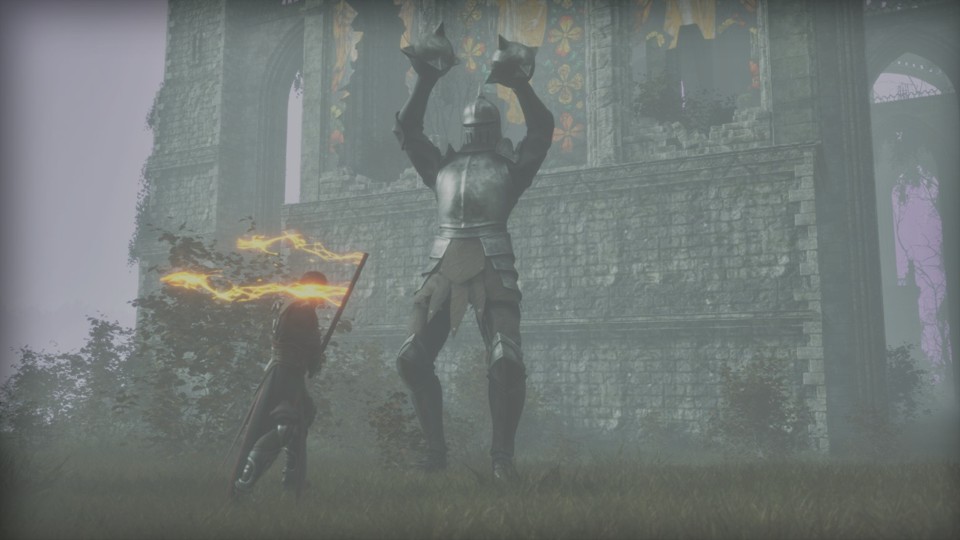
Introduction and Scope
As part of my second year of a Bachelor’s degree in Game Design at ISART Digital, I completed an Pre Internship Project. The objective of this assignment was to design a personal project showcasing my individual skills, particularly those that team-based school projects do not always allow to fully develop.
I chose to develop an advanced melee combat system in Unreal Engine 5, coded in C++ and designed to be modular, customizable, and reusable.
The system takes inspiration from the demanding and precise mechanics of :
- Dark Souls
- Sekiro: Shadows Die Twice
The goal was not to recreate these games, but to analyze their Combat Design from a systemic perspective in order to understand their foundational principles: timing management, pattern reading, risk/reward balance, stamina management, and player feedback.
This project was intended to function as an adaptable framework, allowing a Game Designer or Gameplay Programmer to quickly prototype new weapons, attacks, enemies, and gameplay variations.
Development Objectives
Hard Skills
- Systemic analysis of Combat Design
- Gameplay architecture in C++
- Blueprint integration
- Implementation of animations, VFX, and SFX
Soft Skills
- Personal organization on a long-term project
- Full autonomy (design → implementation → polish)
- Production discipline
- Solving complex technical problems
Project Overview
The project is built around a clear intention : to create a reusable and scalable combat system rather than an isolated prototype.
The ideation phase was intentionally limited. The focus was placed on architectural robustness, system clarity, component modularity, and strict separation between logic and data.
The target audience was not the final player, but game creators — primarily Game Designers and Gameplay Programmers working in Unreal Engine.
The system is designed for PC and console games but remains adaptable to other platforms.
Project Development
Preproduction
The first step was to analyze the combat systems of reference games such as Dark Souls and Sekiro from a systemic perspective:
- Stamina management
- Input windows
- I-frames and dodge management
- Visual and audio impact
- Enemy pattern structure
- Posture / offensive pressure relationship
The objective was to identify fundamental design principles rather than replicate mechanics.
I also used Trello throughout the project to organize tasks, estimate difficulty, and manage production timelines.
System Structure :
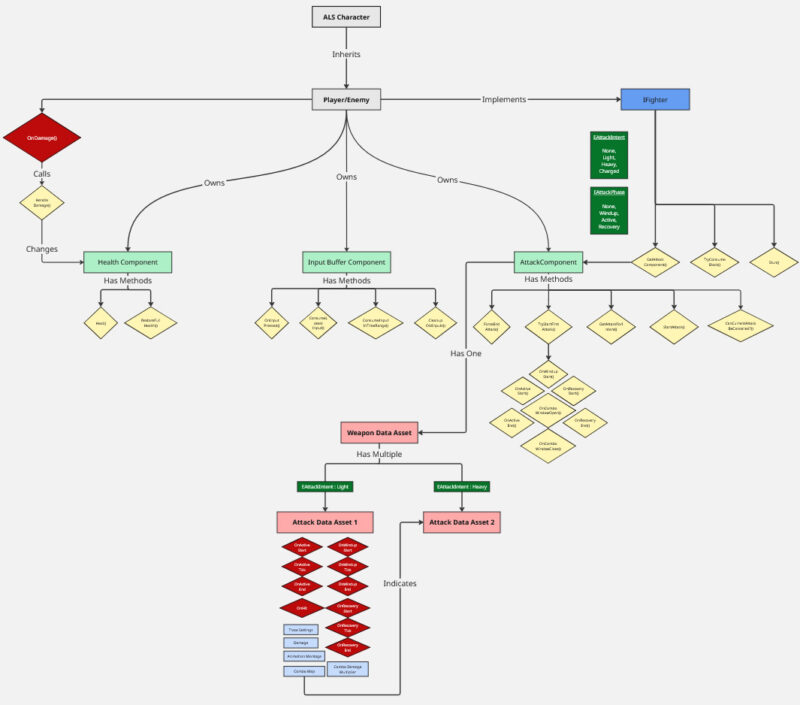
The system was primarily developed in C++, with controlled exposure to Blueprints to allow rapid customization.
Core Development Axes
The main development areas were:
- Attack system (combos, weapons, attack logic)
- Defense system (block, dodge, I-frames)
- Stamina management
- Animation integration via montages and notifies
- Feedback systems (hit stop, VFX, audio)
Particular attention was given to :
- Code readability
- Separation of responsibilities
- Parameter flexibility via Data Structures
- The ability to extend the system without full refactoring
Challenges and Solutions
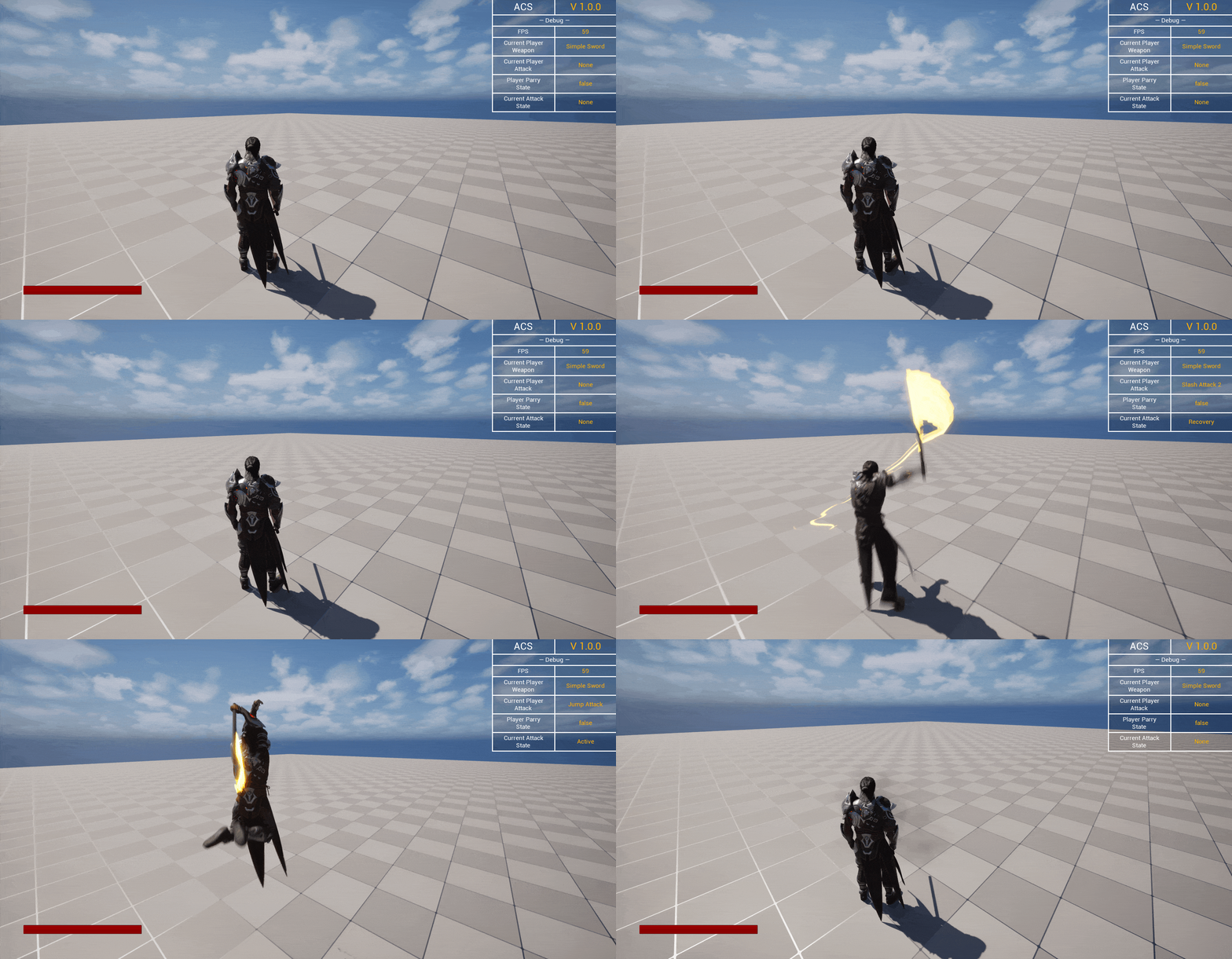
Animation & Gameplay Synchronization
- Problem: Animations and gameplay effects (damage, knockback, hit reactions) were not always perfectly aligned, creating visual inconsistencies.
- Solution: Use of Animation Notifies to trigger events at precise timings and adjustment of Blend Times to smooth transitions.
Modularity and Reusability
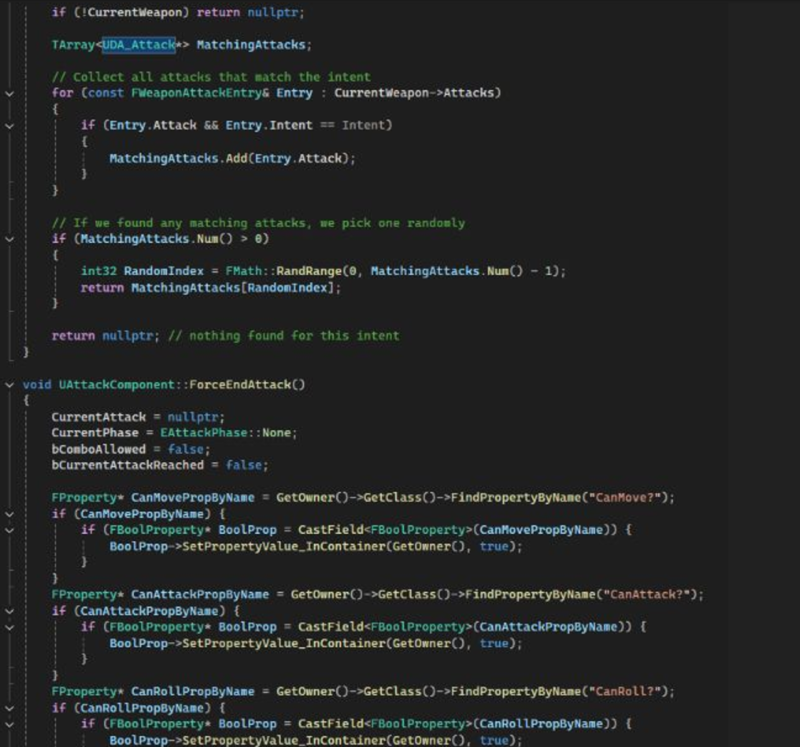
- Problem: Designing a system flexible enough to support multiple weapons, attacks, and enemies without rewriting code for each new case.
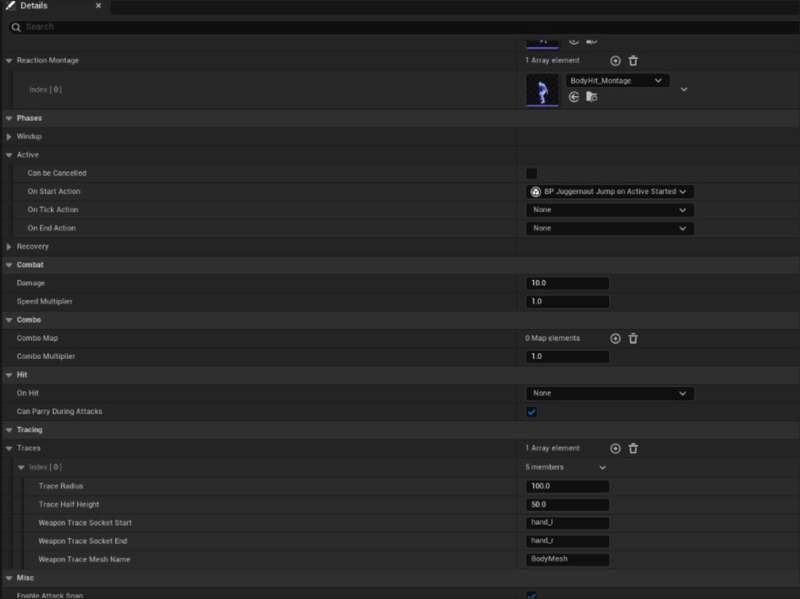
- Solution: A data-driven architecture: weapon and attack parameters are stored in DataAssets and DataTables, allowing new content to be added without modifying core code.
Testing and Demonstration Features
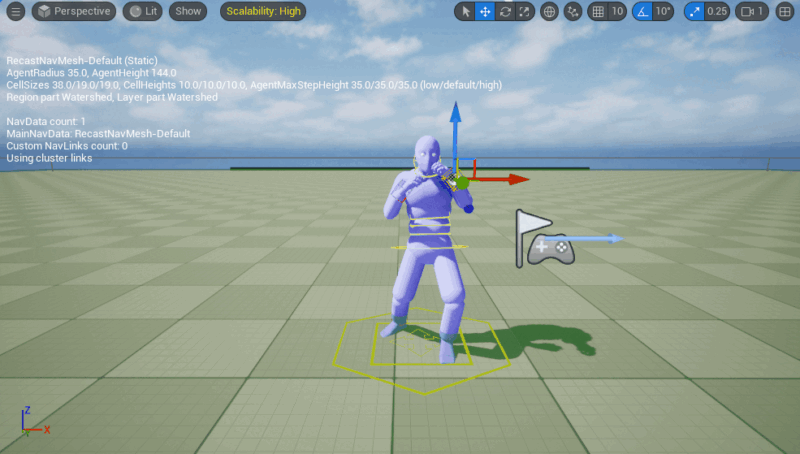
Once the functional base was stabilized, several demonstrative features were added to validate system modularity:
- Rapid addition of new weapons and attacks
- Attack timing variations (with data assets)
These iterations helped test architectural robustness and identify areas requiring optimization or refactoring.
Future Improvements
Current Limitations
- AI and ennemy patterns are simplified
- Impacts, stun, and hit reactions function correctly, but mechanics such as perfect parries could be further expanded
- The combo system remains basic, with predefined and linear chains, lacking dynamic transitions or adaptation to enemy/player states
Planned Improvements
- Enable more complex combo chains based on context, player and enemy posture, and weapon type
- Implement a complete stamina/endurance system with temporary states affecting all actions (attack, block, dodge, parry)
- Allow combinations of environmental effects, weapons, and consumable items
- Add new attack types: charged attacks, stealth assassinations, etc.
- Support multiple equipped weapons
- Develop a generic system for multi-phase enemies and bosses
- Create context-sensitive combo systems that adapt dynamically to combat conditions
Leave a comment